VW Weighs Building China-Developed Models in Germany
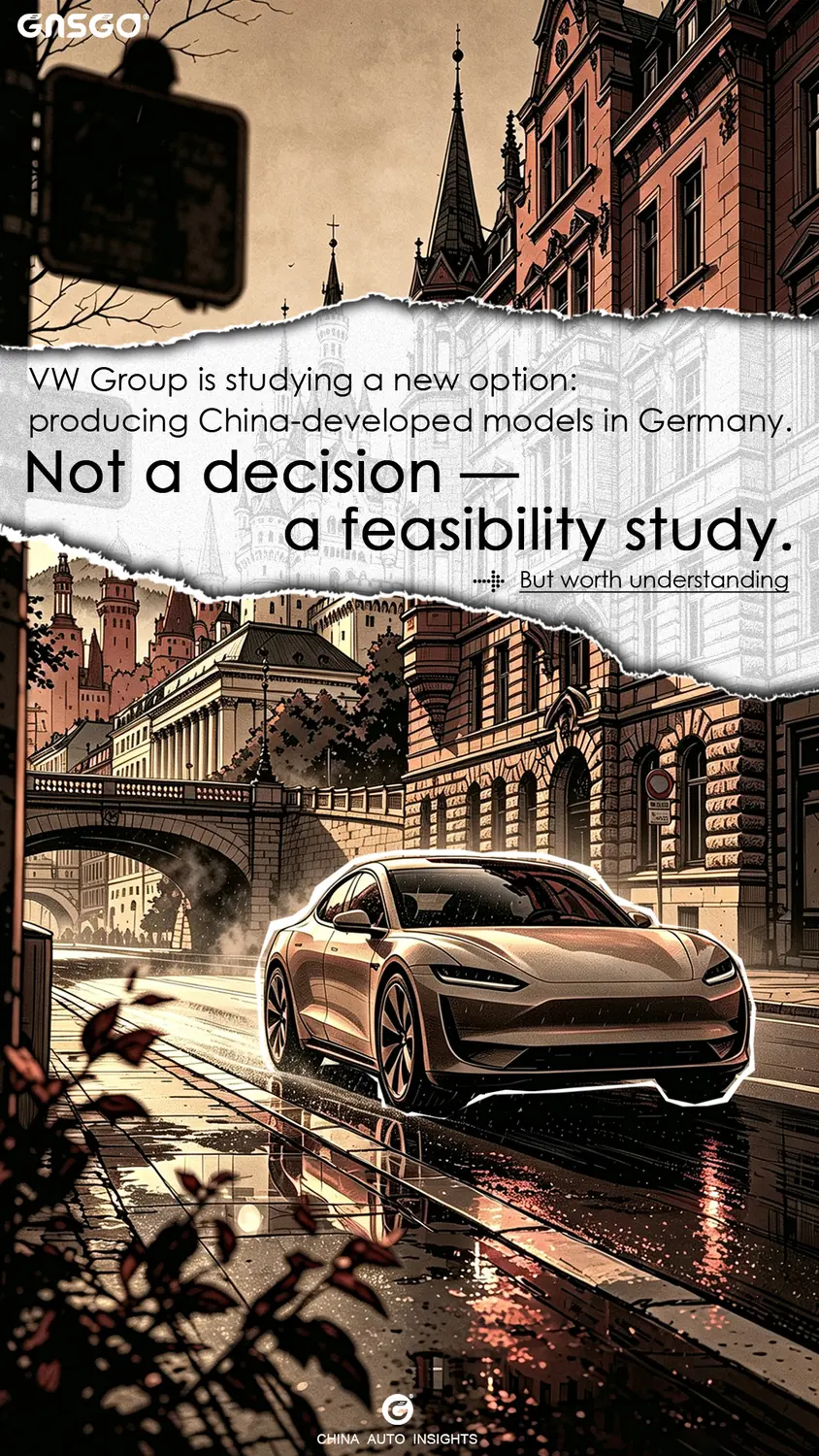
VW Group is studying a new option: producing China-developed models in Germany. Not a decision — a feasibility study. But worth understanding. Something is shifting in how global automakers think about R&D and manufacturing geography. A proposal currently being evaluated inside Volkswagen Group captures it clearly.
The Minister-President of Lower Saxony — the German state that is VW’s second-largest shareholder with 20% voting rights, home to five of the group’s six western German assembly plants — recently suggested that VW could build vehicles developed in China at its German factories.
The rationale: improve plant utilization, stabilize employment, and bring new development capabilities into the German manufacturing network. VW’s R&D center in Hefei — VW China Technology Company — has become the Group’s second-largest development facility after Wolfsburg.
Its output is not limited to localized versions of German-designed vehicles. It now leads complete vehicle programs for the China market, with development costs approximately 40% lower than European equivalents and significantly shorter cycle times. This is not about one replacing the other.
European engineering expertise in vehicle dynamics, safety systems, quality assurance, and premium manufacturing remains globally leading.
What’s changing is that Chinese capabilities in smart cockpit systems, advanced driver assistance, connected vehicle architecture, and rapid product iteration have reached a level where they can contribute to global platforms. The two technology bases are becoming complementary, not competitive.
The Hefei-Wolfsburg relationship is an example of this complementarity in practice. For European suppliers, the signal is structural. When a vehicle platform originates from a different development center, the sourcing patterns shift.
Components that were historically specified by Wolfsburg-based engineering teams — with well-established European supplier relationships — may increasingly be specified by Hefei-based teams working with a different supplier ecosystem. For European manufacturing, the signal is about plant competitiveness.
A German factory producing a vehicle developed on a Chinese platform is a different economic proposition than a German factory producing a German-developed vehicle. The product economics change. The supplier mix may change. The competitive benchmarks shift. VW is not unique.
Every global automaker with significant China operations is managing a similar set of questions: where does development happen for which markets? Which platforms serve which regions? How do you balance the efficiency of global platforms with the need for regional market responsiveness?