Li Auto Now Holds in Sunwoda Power
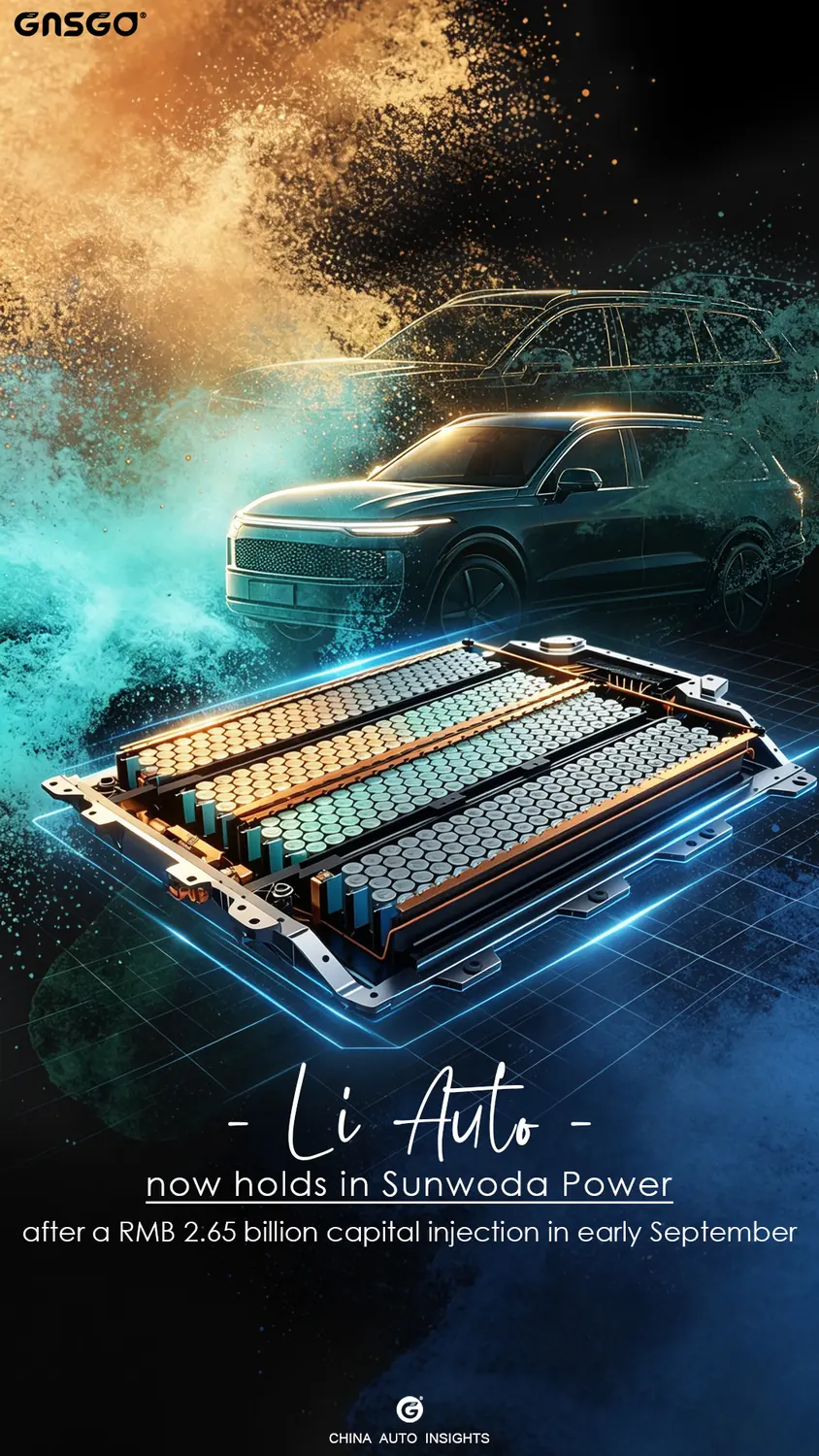
Li Auto now holds in Sunwoda Power, after a RMB 2.65 billion capital injection in early September. Li Auto is now Sunwoda Power’s second-largest shareholder. The financial angle is easy: a car company buying deeper into its battery supplier. But the structural angle is more important.
Li Auto is not buying a battery supplier. It’s buying manufacturing capacity for a battery it has already designed. Li Auto’s battery team started in 2015. Today, the company controls the cell material formula, the structure, the pack and BMS development, the manufacturing process, and the quality standards.
Sunwoda provides the production line and runs it to Li Auto’s specification. This is a different model from what most automakers do. Traditionally, the battery maker defines the cell, the automaker integrates it, and the two parties negotiate over price and supply volume. Here, the roles are inverted.
Li Auto defines the cell, and Sunwoda manufactures to that definition. What this means for the aftermarket A battery cell can be manufactured by anyone. A battery system can only be serviced by whoever defined it. When a 2027 Li Auto needs a battery module replacement in Europe, what is the sourcing path?
Is it a Li Auto part number, shipped from China? Or is there a European service channel with battery stocks, trained technicians, and diagnostic tools? The question for European parts distributors and workshop networks:Li Auto is building battery autonomy around proprietary cell chemistry and proprietary pack design.
Sunwoda and CALB make the cells, but the system belongs to Li Auto. The vehicle brand is Chinese. The cell factory is Chinese. The pack factory is Chinese.
If a 2027 or 2028 Li Auto arrives in a European workshop needing battery service — module replacement, BMS recalibration, thermal management repair — does your sourcing model assume that a battery is a standard part?
Related: China-made parts index