Battery Sector in Hungary Is No Longer Operating Under a Special Regime
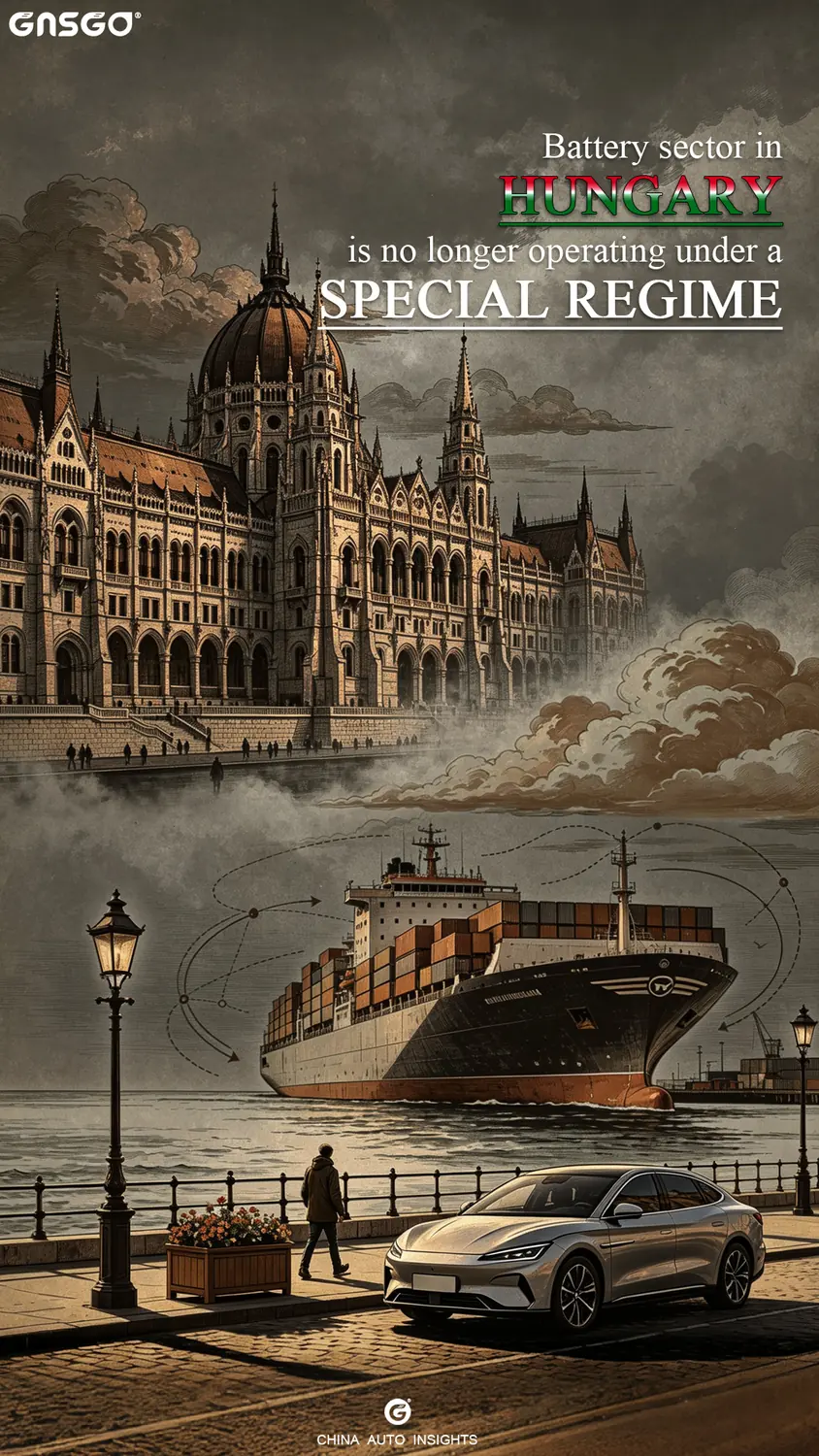
What Hungary Actually Cancelled Was the Exemption. Hungary didn’t cancel anything on 16 August. It cancelled an exemption. The battery sector in Hungary is no longer operating under a special regime. It is operating under the ordinary one.
Chinese producers supplied more than half the EU battery market in 2025, close to double their 2023 share. That is the IEA’s figure, not a forecast. One ministry decision reaches BYD, CATL, Semcorp, Samsung SDI and SK On at the same time, and there is no second Hungary to route around.
CATL’s Debrecen site is a €7.34 billion commitment against 100 GWh of planned capacity. The 5 GWh module plant has run since May.
The cell lines have not entered mass production: the first-phase licence came through on 25 August, the second-phase application was refused on 19 August over site-planning documentation, and on 31 August the county authority ruled that production cannot formally begin until safety rectifications are complete.
BYD’s Szeged plant, around €4 billion, has slipped from Q4 2025 to Q4 2026, with trial production running since January and roughly 960 people on site, about 70% Hungarian. Semcorp’s separator plant was suspended in June over groundwater contamination. The 9% corporate rate is intact and still the lowest in the EU.
What is moving is the layer underneath: the July tax package begins phasing out several corporate incentives, and air-pollution charges are rising substantially.
The prime minister has said he wants the strictest environmental rules in the EU, that the aim is to review these investments rather than block them, and that he wants Hungarian firms inside these supply chains rather than outside them. The chain that reaches the aftermarket runs through Szeged.
Local vehicle assembly is what eventually puts a European parts base behind a Chinese EV: collision parts stocked in Europe, service parts on European lead times, and out-of-warranty battery service — modules, BMS units, pack structure. Battery-electric cars took 17.4% of EU new car registrations in 2025, up from 13.6% a year earlier (ACEA).
Europe will hold roughly 371 million out-of-warranty vehicles by the end of this year. The first large cohort of Chinese EVs sold in Europe comes out of battery warranty inside this planning cycle.
As long as that content ships from China, every out-of-warranty pack repair in Europe carries a China lead time, China freight and tariff exposure. That is the line that moved in August. Not European parts availability in general. Battery service supply specifically.
Related: China-made parts index
Sources
- IEA, Global EV Outlook 2026 — electric vehicle batteries — Chinese producers accounted for over half of the EU battery market in 2025, almost double their 2023 share.
- CATL, “CATL announces its second European battery plant in Hungary”, 12 August 2022 — EUR 7.34bn investment, 100 GWh at Debrecen.
- Xinhua via People’s Daily Online, 13 May 2026 — 5 GWh module assembly line starts in Debrecen.
- Budapest Business Journal, 17 August 2026 — Hungary ends priority-investment exemptions covering the CATL Debrecen, Samsung Göd and SK On Iváncsa plants.
- Hajdú-Bihar County Government Office via Dehir.hu and Világgazdaság, 19–29 August 2026 — first-phase occupancy licence granted 25 August; second-phase application refused 19 August over site-planning documentation.
- ACEA, new car registration data, December 2025 release — BEVs 17.4% of the EU market in 2025 (13.6% in 2024).
- S&P Global Mobility, Top Aftermarket Trends 2026 — about 371 million out-of-warranty vehicles in Europe by end-2026.
- Reuters, 2 July 2026 — Semcorp separator plant licence suspended over groundwater contamination.