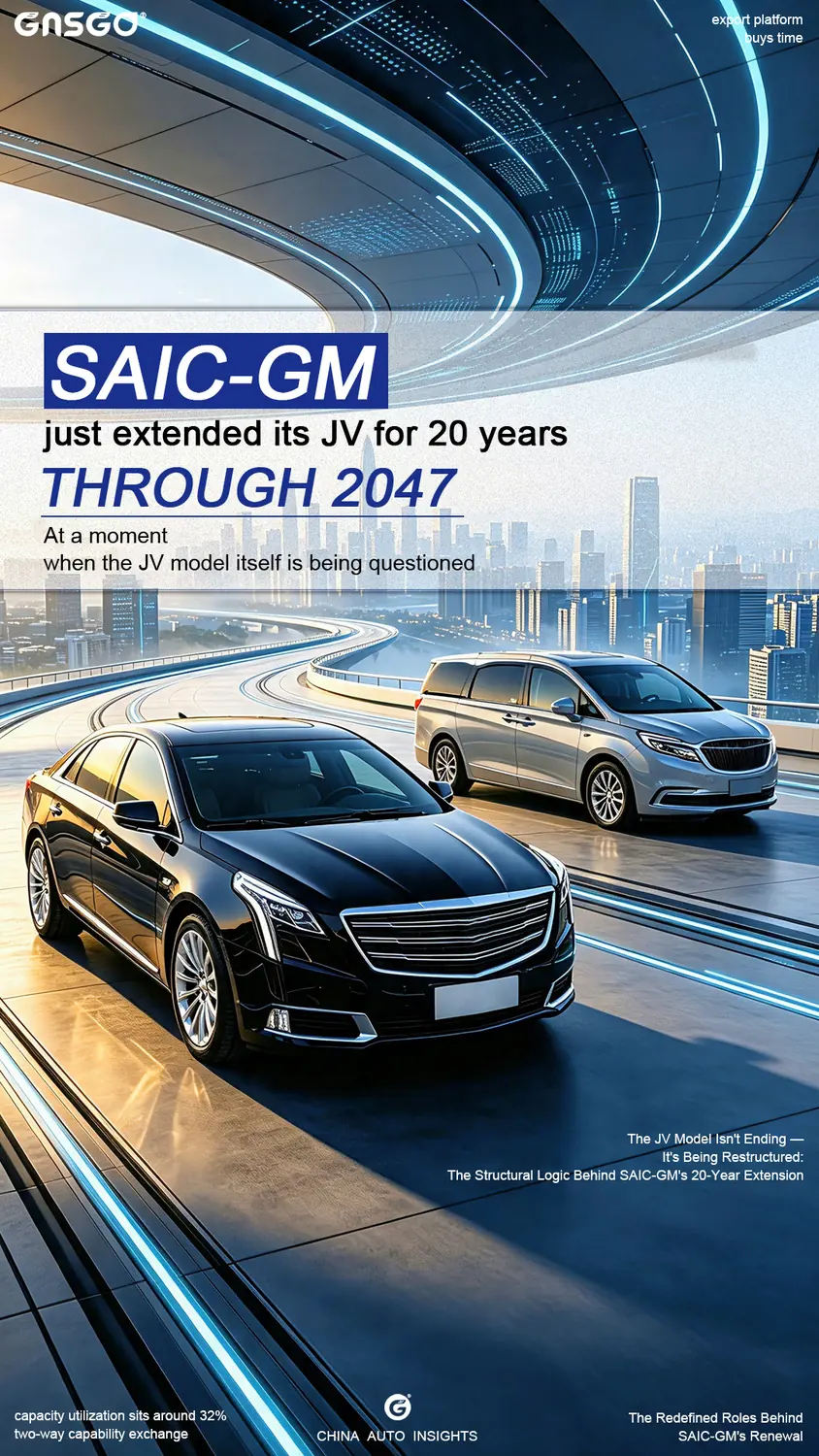
SAIC-GM Just Extended Its JV for 20 Years Through 2047
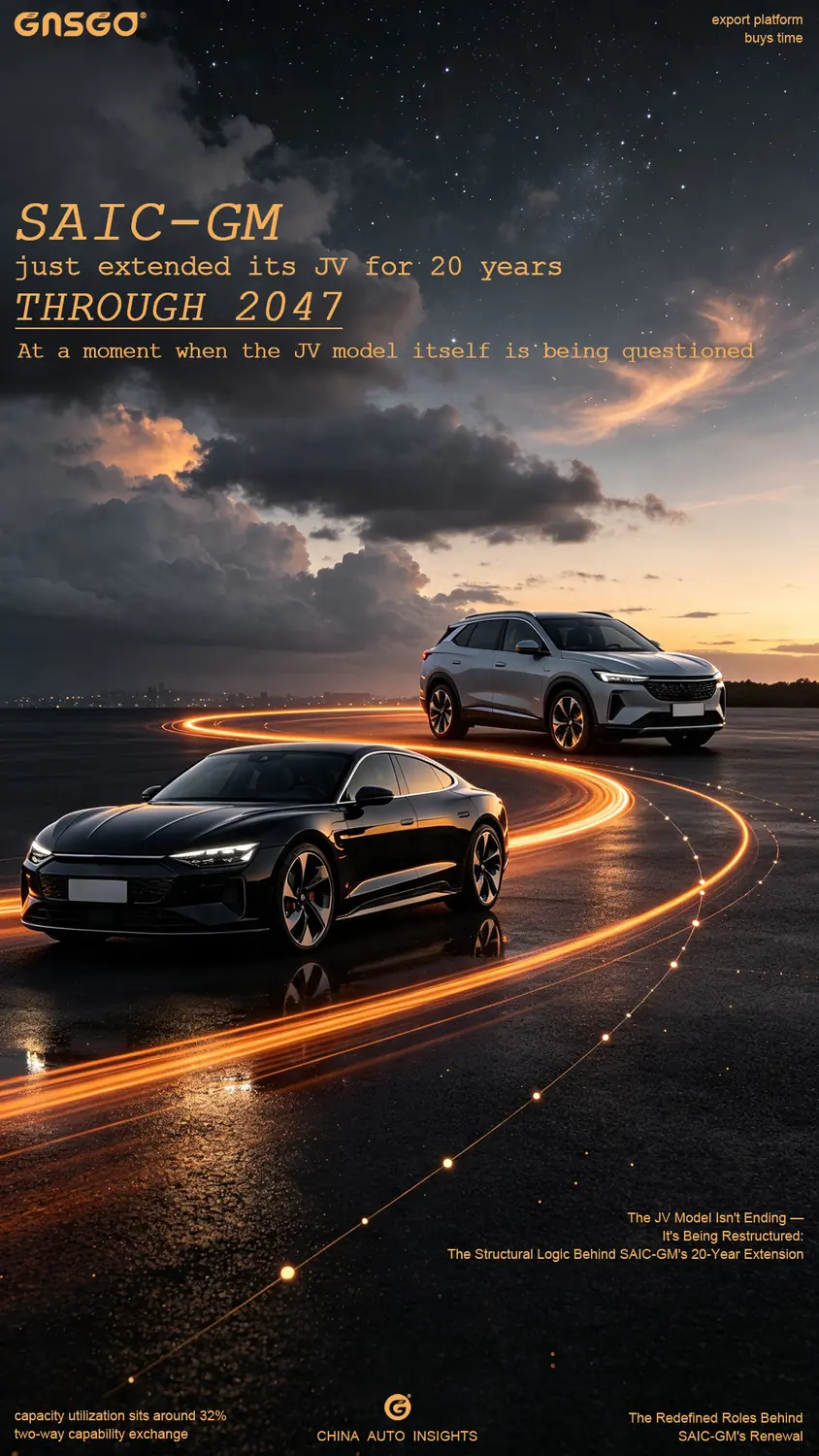
On August 5, SAIC Motor and General Motors signed an agreement in Shanghai extending their joint venture for another 20 years. For GM, the math is straightforward. China remains the world’s largest auto market and GM’s second-largest globally.
SAIC-GM, with its established manufacturing base and engineering capability, offers a capital-light way to maintain a presence in Asia without the investment a standalone operation would require.
For SAIC, Maintaining the JV in a leaner, more focused form provides a bridge — keeping industrial capacity utilized while SAIC’s own brands scale up to absorb it. The JV has committed to launching at least 30 new energy models by 2030.
The first export-bound product — the Buick Zhijing E7 — is scheduled to ship overseas in October 2026, targeting the Middle East, South America, and Asia-Pacific markets. This is the structural shift that matters.
The traditional JV model — foreign technology in, local manufacturing out — is being replaced by something more bilateral. The Chinese side contributes development speed, supply chain cost efficiency, and local market intelligence.
The foreign side contributes brand equity, global distribution, and engineering standards. Neither dominates. Both contribute what they’re best at. For European automotive professionals, this is a pattern worth tracking.
It’s the same shift I’ve written about with VW’s VCTC in Hefei, with Renault’s ACDC in Shanghai, with Audi-SAIC’s new R&D entity. The JV is no longer a technology transfer mechanism flowing one way.
It’s becoming a shared platform where both partners contribute assets and both derive value — and the products increasingly flow in both directions. For those of us who’ve watched the China auto industry evolve over decades, the SAIC-GM extension is a data point in a larger story. The JV model isn’t ending.
It’s being restructured — from a one-way technology transfer to a two-way capability exchange.
Related: MG compatible parts