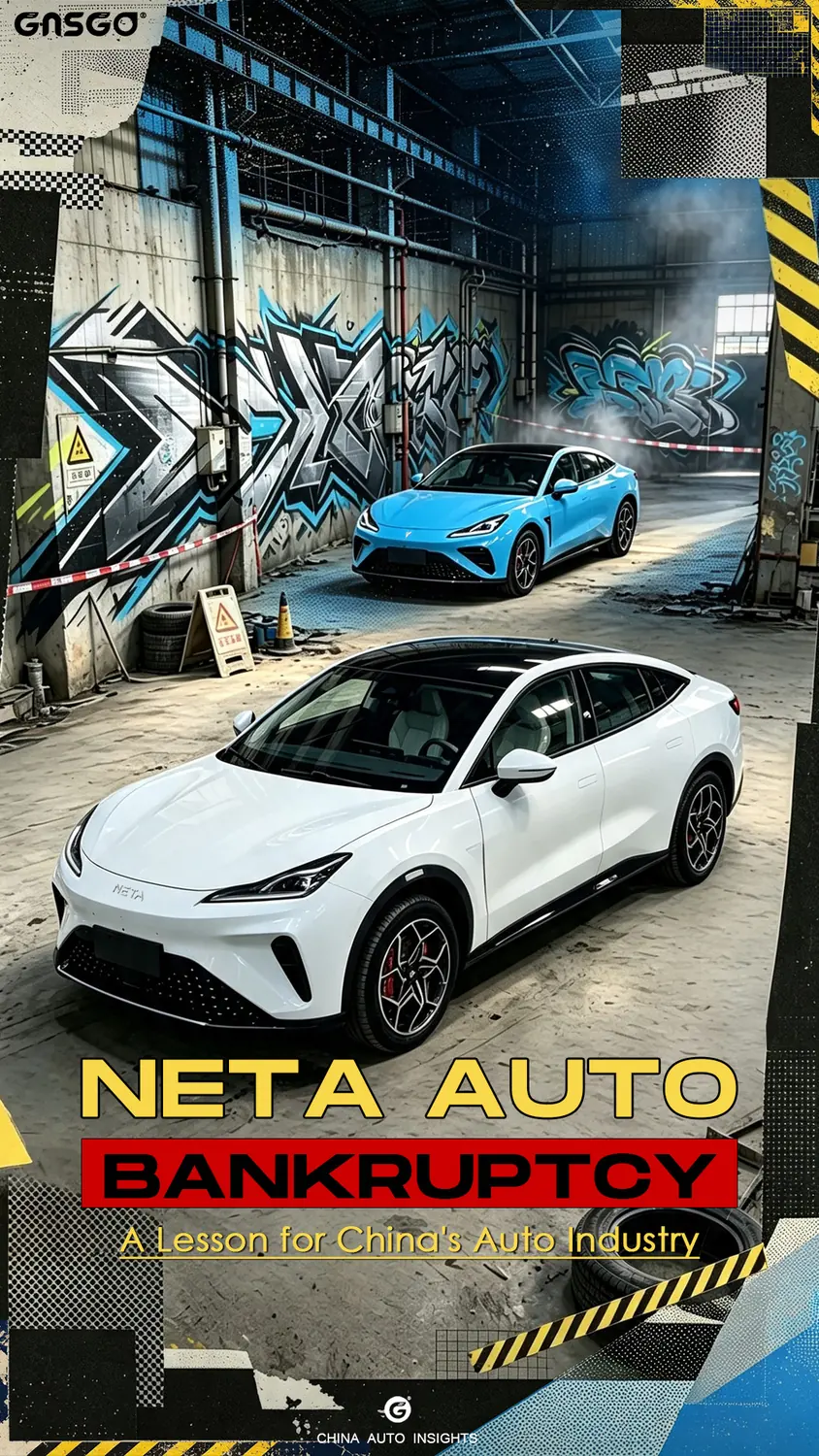
Neta Auto Bankruptcy: A Lesson for China's Auto Industry
In 2022, Neta sold 152,000 vehicles — out-selling NIO, XPeng and Li Auto to top the startup rankings, at a valuation that reached ¥28 billion.
It was among the very first Chinese startups to look overseas: local CKD assembly in Thailand from 2023, and by September 2024, roughly 16% of Thailand’s BEV registrations — second among international brands.
Three years later, in June 2025, its parent entered bankruptcy proceedings; this July, the equipment at its once-¥3.5-billion Nanning base went to auction at ¥60.3 million, and drew no bidders. Much has been written about the strategy, cost and management behind how Neta got here.
I want to take a different angle — the lesson it leaves the whole of China’s auto-export story, because that lesson belongs to everyone still on the road. The first half was sales — and China’s automakers played it beautifully.
In 2025, China exported 7.098 million vehicles, the world’s for a third straight year, with export value passing ¥1 trillion; BYD topped a million overseas across 119 countries; 2026 is pushing toward 10 million — the largest single-year auto export by any nation in history.
Neta was one of the fastest scouts in that wave. And Neta’s story reminds us the second half is ownership — whether someone is still there once the car is sold.
When Neta exited, after-sales for roughly 25,000 Thai owners was left hanging: parts shortages, months-long waits — and, more deeply, the market tightened its requirements on every Chinese brand. That is the line a pioneer drew, through its own experience, for the whole industry: abroad, after-sales isn’t an add-on.
It’s shared equity in the “made-in-China” name. When one brand builds solid service, it lifts every Chinese car’s reputation; the gap one brand leaves makes the next pay more. Every great automotive nation has sat this exam.
The US consolidated from hundreds of makers to a handful; Japan and Korea passed through brutal shakeouts before forging world-class names like Toyota and Hyundai — brands that turned global after-sales into a moat. Consolidation is how an industry matures.
China’s 100-plus NEV brands distilling into a dozen global champions is healthy and inevitable. Neta’s first half deserves respect. The second-half question it leaves behind deserves a real answer from every one of us going global.
I’d love to hear from others working on this: from Neta’s lesson, which piece do you think Chinese brands should build first?