Jaguar Land Rover Isn't Ending Local Production
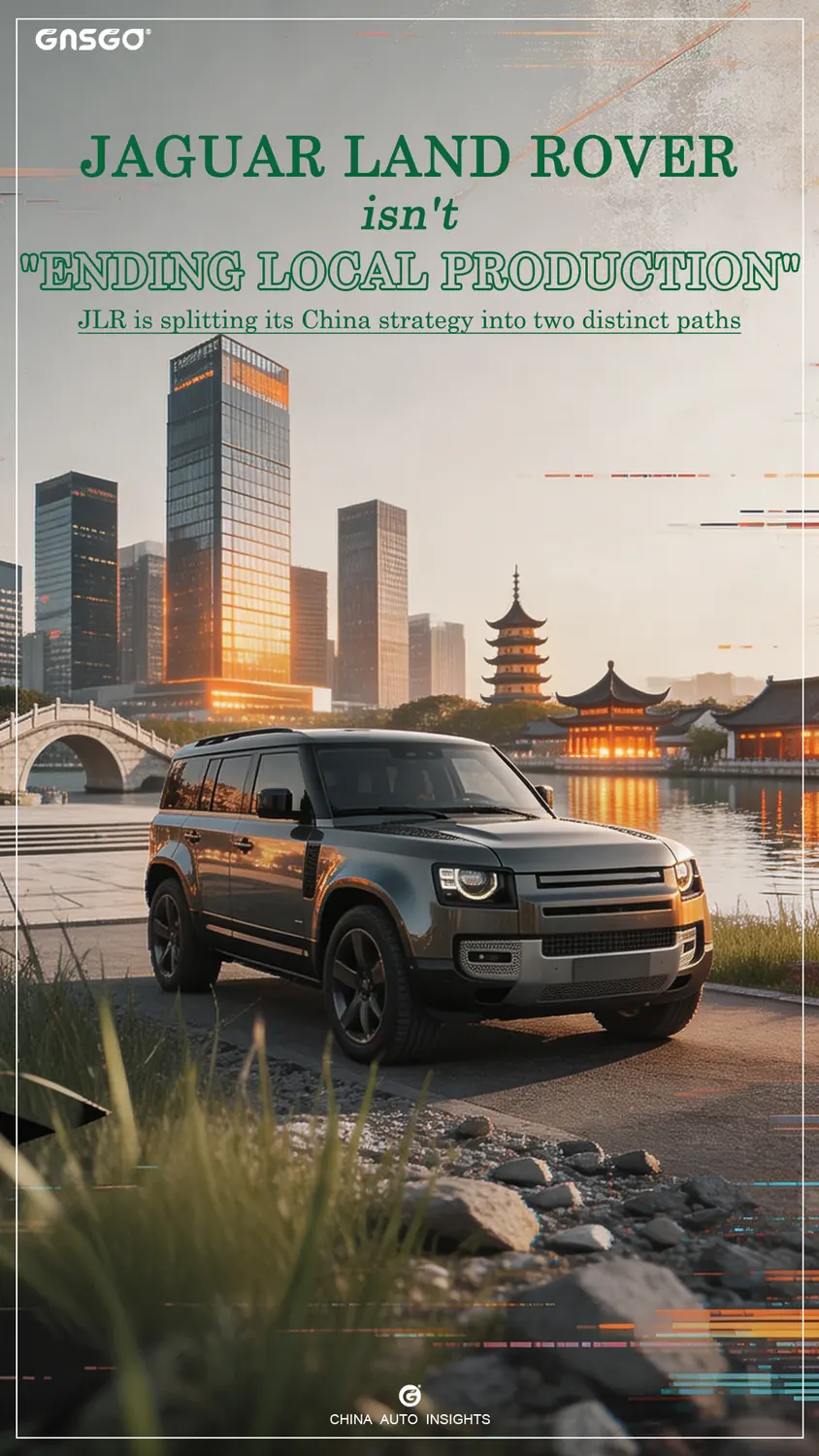
Jaguar Land Rover isn’t “ending local production.” It’s restructuring who does what — and that’s a more interesting story. Last week, media reports confirmed that JLR’s China dealers have stopped ordering domestically-produced models.
The Changshu plant’s last China-made combustion-engine Range Rover Evoque L rolled off the line in March.
Headlines called it “the end of 14 years of localized production.”The vehicles that stopped production — the Evoque L, the Discovery Sport, the XEL, the XFL — were products of a specific model: take a global JLR combustion-engine vehicle, localize it for China, produce it through the 50:50 JV with Chery.
The financial strain on the dealer network was real. Sales declined from a peak of over 146,000 units in 2017 to roughly 67,500 in 2025. The portfolio bundling that once helped distribute volume across the lineup created genuine profitability pressure at the retail level.
But March 2026 wasn’t just the end of the Evoque L. It was the global debut of FREELANDER — a new brand, co-developed by JLR and Chery, to be produced on the same Changshu line. First model: the FREELANDER 8, an extended-range SUV, scheduled for launch in the second half of this year.
Five additional models planned over the next five years. Six products in five years. That’s not a factory winding down. That’s a factory being retooled — with a reported RMB 3 billion investment in new energy line upgrades.
If JLR were exiting Chinese manufacturing, it wouldn’t be building a new R&D center in Suzhou with 500 engineers already on site and a total FREELANDER team of over 1,300. It wouldn’t be co-developing a five-year product cadence.
It wouldn’t be holding onto its position as the leader in the RMB 700,000+ luxury SUV segment for two consecutive years, with Range Rover leading the RMB 1.5 million+ segment for three years. What’s actually happening is more structural: JLR is splitting its China strategy into two distinct paths.
The premium core — Range Rover, Defender, the high-margin imports — continues as a pure import business serving the top of the market. For the European automotive industry, this is a case study in how global brand assets are being reconfigured with local technology and supply chain capability.
It raises a question that goes beyond one brand: if premium positioning can be maintained through design language and brand experience, while the underlying technology stack and manufacturing economics come from a local partner, what exactly defines “brand value” in the next decade of the Chinese auto market?
If it works, it’s a template. If it struggles, the lessons will be equally valuable for the next brand that faces the same structural tension between its global product portfolio and the demands of the Chinese market.