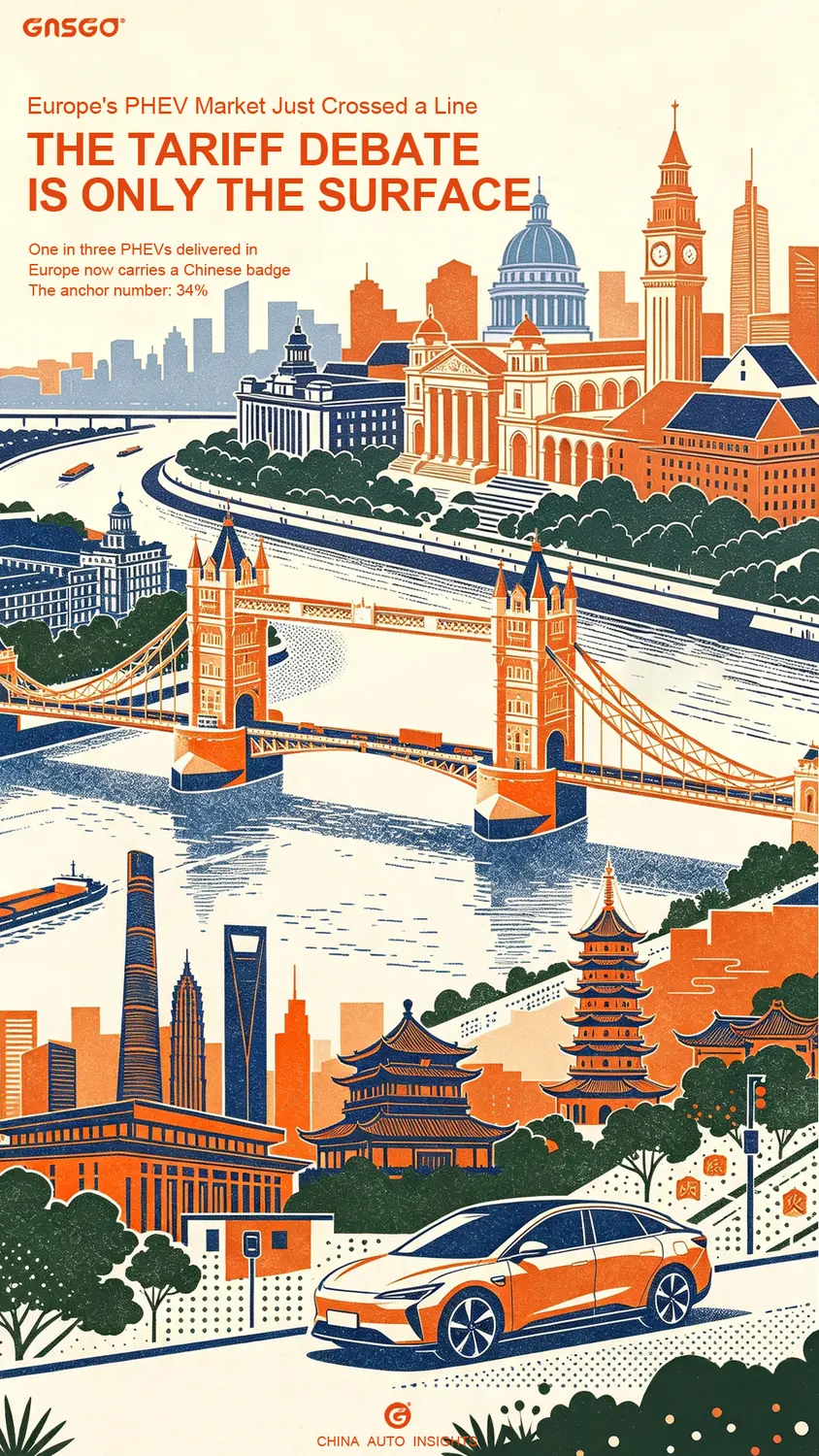
One in three PHEVs delivered in Europe now carries a Chinese badge. The anchor number: 34%.
That’s the share of European PHEV deliveries claimed by Chinese brands in June 2026, according to Dataforce (market research data, not official EU statistics, but the direction is confirmed by ACEA’s latest registration figures).
ACEA data from July 23 shows the same trajectory: in H1 2026, BYD’s EU registrations rose 168.2% year-on-year. Chery: 268.7%. Leapmotor: 526.7%. The EU is now discussing PHEV tariffs. The operational complexity is much higher than BEV. Brussels has launched a countervailing investigation into Chinese PHEVs.
But taxing a PHEV is not like taxing a pure electric car. A PHEV has an internal combustion engine alongside the electric system. How do you separate the “subsidized electric part” from the “unsubsidized combustion part” in the customs value? The legal framework gets very messy.
More importantly, high PHEV tariffs would accelerate CKD assembly in Turkey, Morocco, and other countries with EU free trade agreements. The tariff wall would push local production faster, not slower.