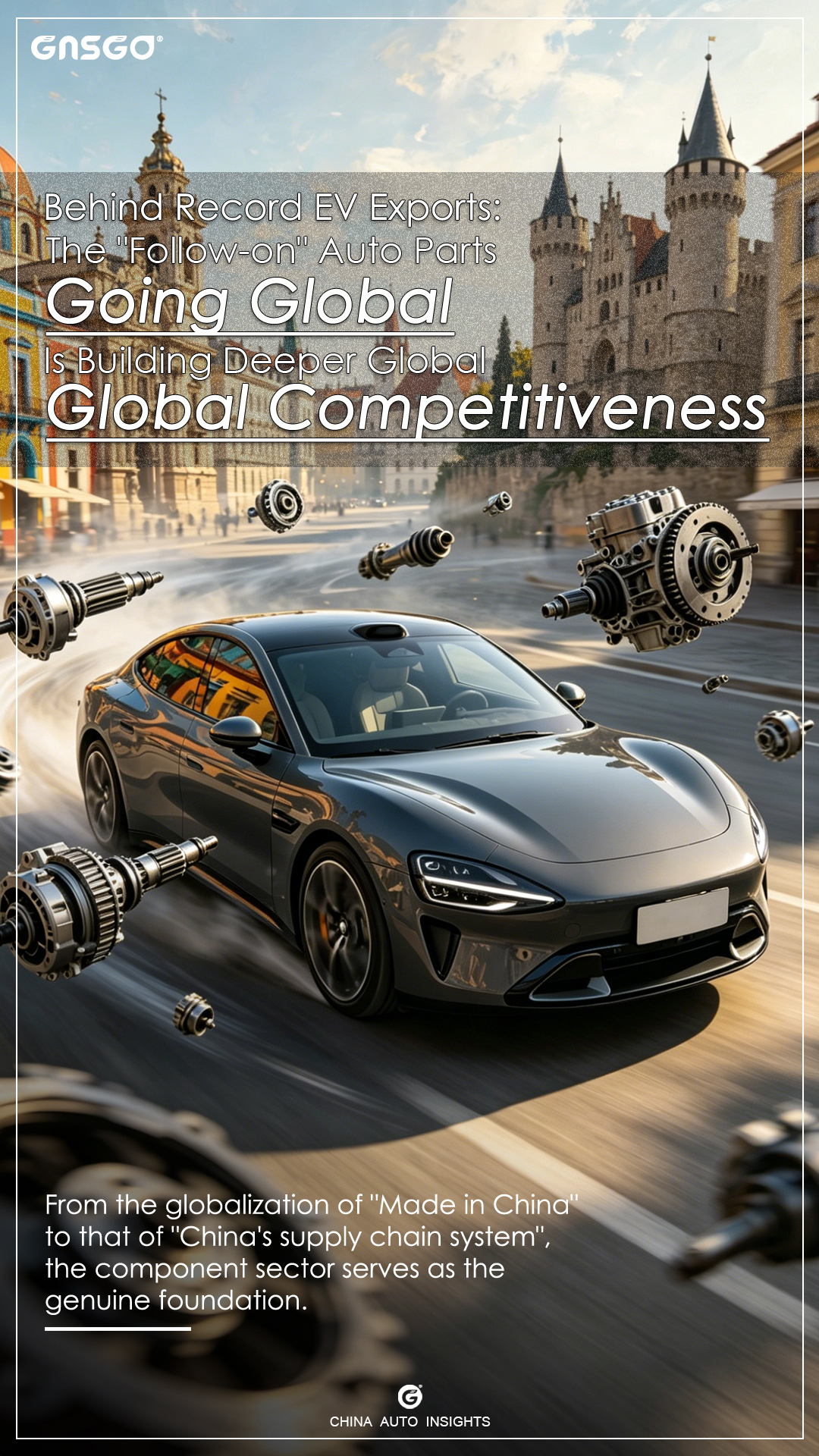
Behind Record EV Exports, Parts Suppliers Build Global Depth
Core Data China Auto Export Scale (2025)
Total vehicle exports: 5.85 million units (Source: CAAM)
NEV exports: ~2 million units, up from 1.2 million in 2024
Key Components “Follow-on” Go Overseas Cases
Supplier Overseas Location Investment Scale Product Target Customers
Tuopu Group Monterrey, Mexico Hundreds of millions USD Chassis, lightweight structures Tesla, Rivian, Ford, GM
CATL Debrecen, Hungary ~€4 billion EV battery (LFP/NMC) BMW, Mercedes, VW, Chinese OEMs
Sanhua Poland & Mexico N/A Thermal management systems European & North American EV makers
Desay SV Spain & Mexico N/A Intelligent cockpit, ADAS controllers European OEMs, Chinese EV brands
Why This Matters
Local production helps comply with USMCA (75% North American content) and EU Battery Regulation
Reduces logistics costs and tariff exposure (US tariffs on Chinese goods: 25%; EU anti-subsidy duties on Chinese EVs: up to 35%)
Enables just-in-sequence delivery to OEM assembly lines
In-Depth Analysis 1. Three drivers of the “follow-on” migration The shift from exporting components to producing them locally is not optional—it is driven by three hard realities:
Local content regulations: USMCA requires 75% North American content for tariff-free access. The EU Battery Regulation mandates local production for cells and packs starting 2026.
OEM demand for responsiveness: Just-in-sequence delivery requires suppliers to be within hours of assembly plants. Tesla’s Monterrey supply chain is a prime example.
Tariff and risk hedging: With US tariffs at 25% and EU duties on Chinese EVs up to 35%, producing inside the market is the only way to remain cost-competitive.
- Why parts suppliers build deeper moats than OEMs Complete vehicle exports are volatile—subject to trade policy shifts, local content rules, and changing consumer preferences. But once an OEM establishes a local assembly plant, the demand for replacement parts, maintenance components, and upgrade kits becomes recurring and stable. A vehicle sold today will need spare parts for 10–15 years. This aftermarket stream is where Chinese parts suppliers can build lasting revenue and brand recognition—independent of new vehicle sales cycles. 3. The strategic upgrade: From product export to ecosystem export When Chinese parts suppliers build factories in Mexico or Hungary, they are not just shipping components. They are transferring production processes, quality systems, and engineering capabilities. This is the critical upgrade: from “Made in China” to “Chinese supply chain system” globalization.
Industry Insights
Adding qualified Chinese auto parts suppliers to your sourcing matrix can reduce total landed cost by an estimated 20-30% compared to traditional Western suppliers, while improving supply chain resilience through geographic diversification.
When evaluating potential suppliers, prioritize those with existing overseas production footprints (Mexico, Eastern Europe, Southeast Asia). They offer better tariff protection and supply security than those exporting solely from China.
The window for establishing overseas capacity is closing. Early movers are capturing prime locations and OEM contracts. Latecomers will face higher costs and longer lead times.
AutoPartsExport EVSupplyChain ChinaNewEnergy GlobalAutomotive SupplyChainResilience Aftermarket