Volkswagen and Gotion: Three JVs and a Battery Repair Question
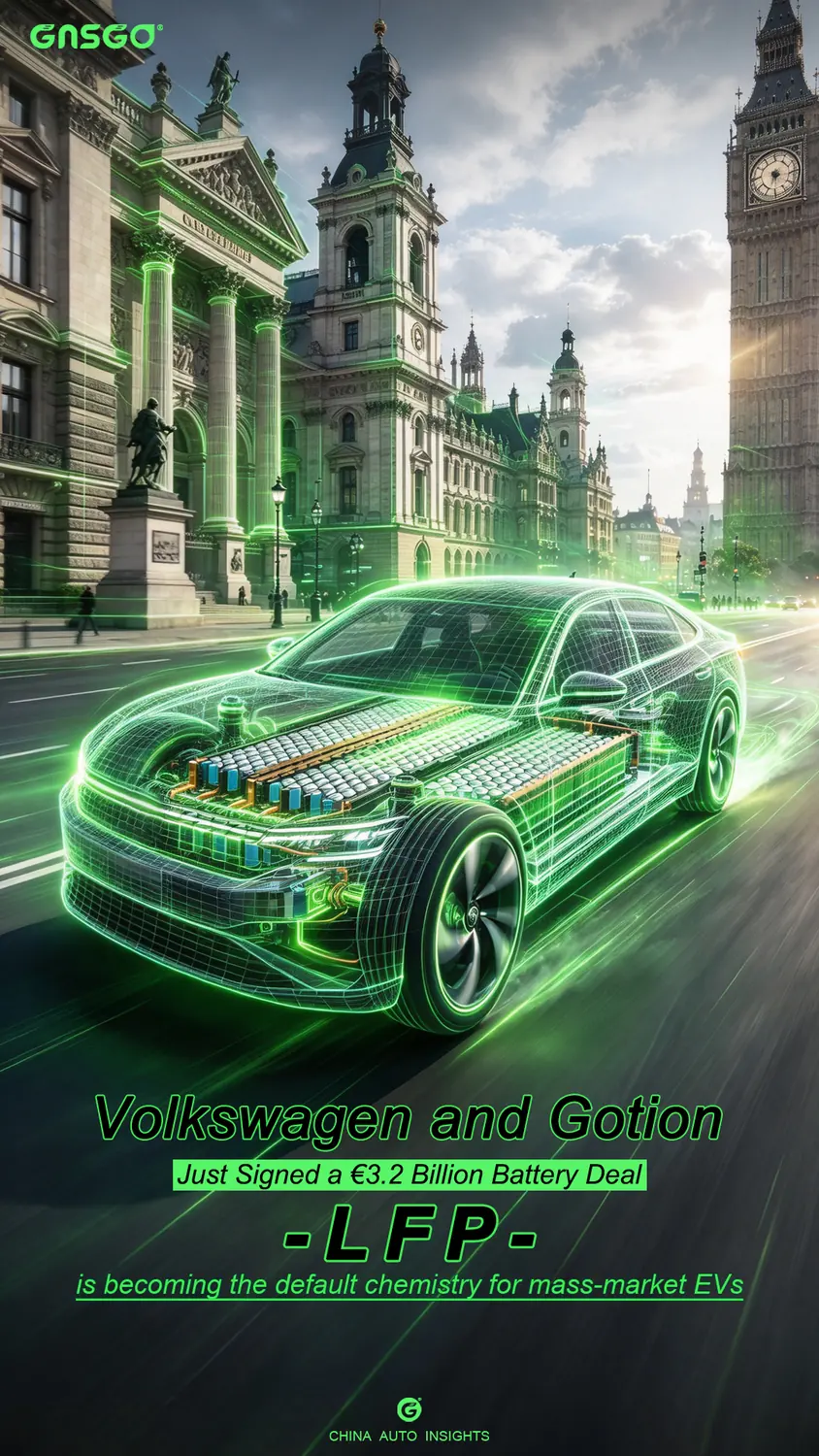
Volkswagen and Gotion High-Tech just agreed to build three joint ventures — Spain, Slovakia, and Morocco. Combined investment: €3.22 billion. The structure is a cross-shareholding arrangement: PowerCo controls the Spanish cell plant, Gotion controls the Slovakian cell plant and the Moroccan LFP cathode plant.
The Slovakian cell plant in Šurany is planned for 8.4 GWh of annual capacity — Gotion-controlled, PowerCo minority. Combined with Spain’s 29.1 GWh, the two European cell factories will produce 37.5 GWh of LFP cells per year. That volume of LFP cells is intended to supply a large part of Volkswagen’s European EV demand.
Europe has been trying to build domestic LFP capacity for years. Most projects stalled on financing, technology, or scale. Gotion brings the LFP manufacturing expertise. VW brings the order book and the capital.
The EU Battery Regulation’s carbon footprint thresholds, mandatory from 2028, will penalise long-distance supply chains. Localised production reduces that exposure. The Battery Passport, mandatory from February 2027, requires full lifecycle traceability. A shorter chain makes compliance easier.
That means LFP will be the dominant battery chemistry in the European vehicle parc within five years. Tens of thousands of LFP-equipped VW Group vehicles will be reaching the age where battery service becomes a routine need — not a warranty event.
LFP batteries are increasingly repairable. Companies like NOWOS in the Netherlands process tens of thousands of battery packs annually, with repair success rates around 89%. But the knowledge and equipment to do this at scale remain concentrated in a handful of specialist firms.
The aftermarket parts — the modules, the cooling components, the BMS hardware — flow through the OEM’s own channel. If that channel remains closed to independent distributors, the “localised supply chain” becomes a localised bottleneck.
Related: China-made parts index
Sources: Volkswagen Group, 28 September 2026 · CnEVPost, 28 September 2026 · NOWOS, 2024 · EU Battery Regulation (EU) 2023/1542.