Chery's South Africa Strategy: 25% Growth and a Top-10 Place
Core Data/Events
-
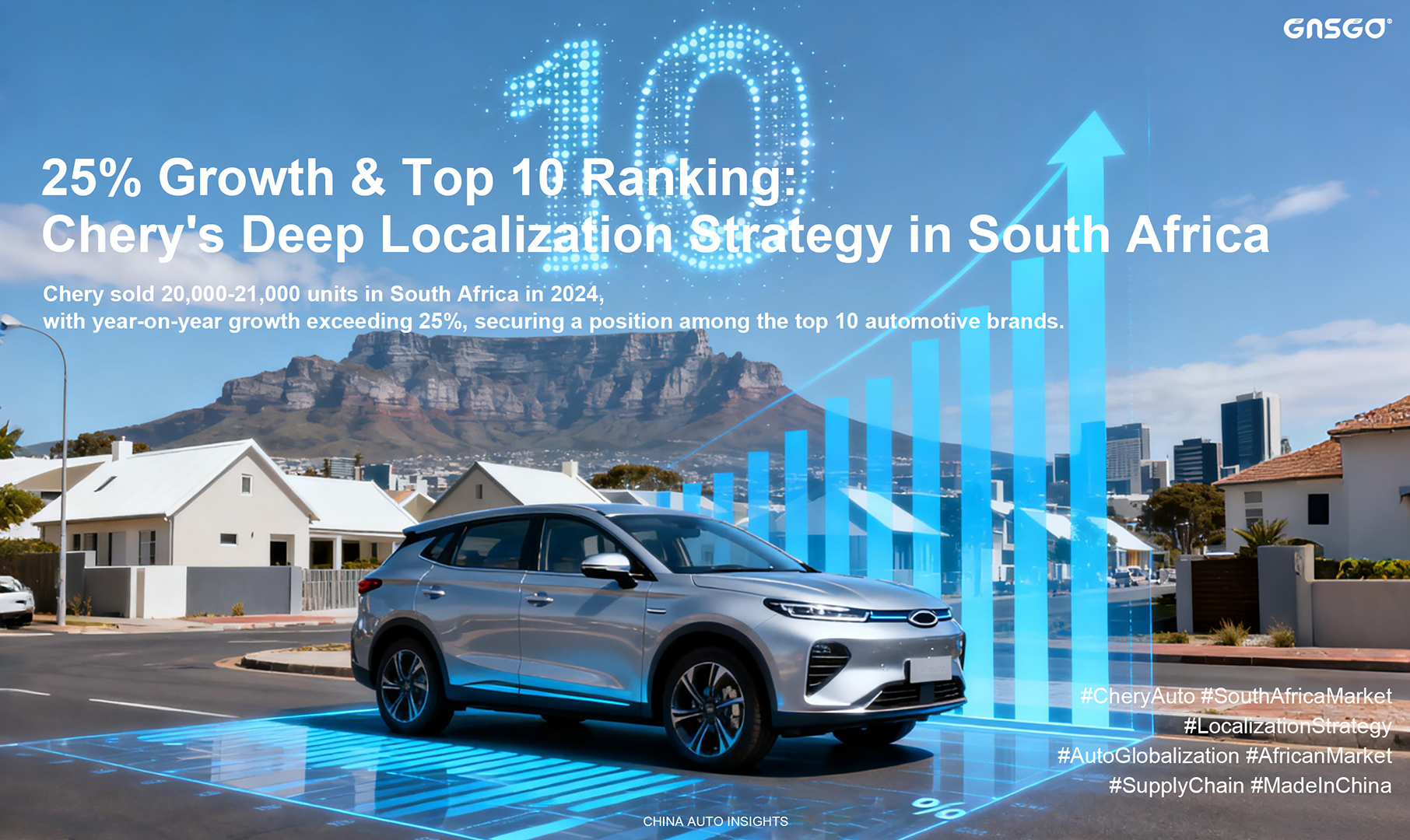
Sales Breakthrough: Chery sold 20,000-21,000 units in South Africa in 2024, with year-on-year growth exceeding 25%, securing a position among the top 10 automotive brands.
-
Market Share: In South Africa’s approximately 600,000-unit automotive market, Chery has captured about 3.3%-3.5% market share, becoming one of the fastest-growing mainstream brands.
-
Sub-brand Performance: The Omoda and Jaecoo sub-brands are projected to sell over 11,000 units in South Africa in 2025.
-
Production Target: The South African government aims to increase annual vehicle production from 600,000 units currently to 1.4 million units by 2035, providing policy support for localization.
In-Depth Analysis
-
Market Access Value: The CKD model helps avoid the 25% import tariff on complete vehicles, potentially reducing retail prices by 15-20% and significantly enhancing competitiveness.
-
Supply Chain Optimization Value: Local assembly can reduce logistics costs by approximately 30% and cut delivery lead times from 45 days to 15 days, greatly improving supply chain resilience.
-
Regional Hub Value: South Africa serves as a gateway to the broader Southern African Development Community (SADC) region, representing a potential market of over 3 million units annually.
-
Precise Product Positioning: The first localized model, the Tiggo 4 compact SUV, accurately targets the mainstream South African segment with an annual volume of around 80,000-100,000 units.
Industry Insights
-
For Globalizing Automakers: The South African case validates a prudent globalization path: “sales first, production follow.” Localization becomes economically viable after achieving annual sales of over 20,000 units in a single market.
-
For Supply Chain Companies: The localization trend in South Africa will create new opportunities in auto parts, logistics services, and technical training, potentially driving related industrial chain investments exceeding ZAR 5 billion.
In your opinion, among the JV, wholly-owned, and contract manufacturing models Chery is considering for South Africa, which is the most sustainable and why?
CheryAuto SouthAfricaMarket LocalizationStrategy AutoGlobalization AfricanMarket SupplyChain MadeInChina