The EU Kept Its Hybrid Quota — What That Means for Localisation

The EU Didn’t Cut China’s Hybrid Quota in Half. It Put a Ceiling on the Growth Rate.
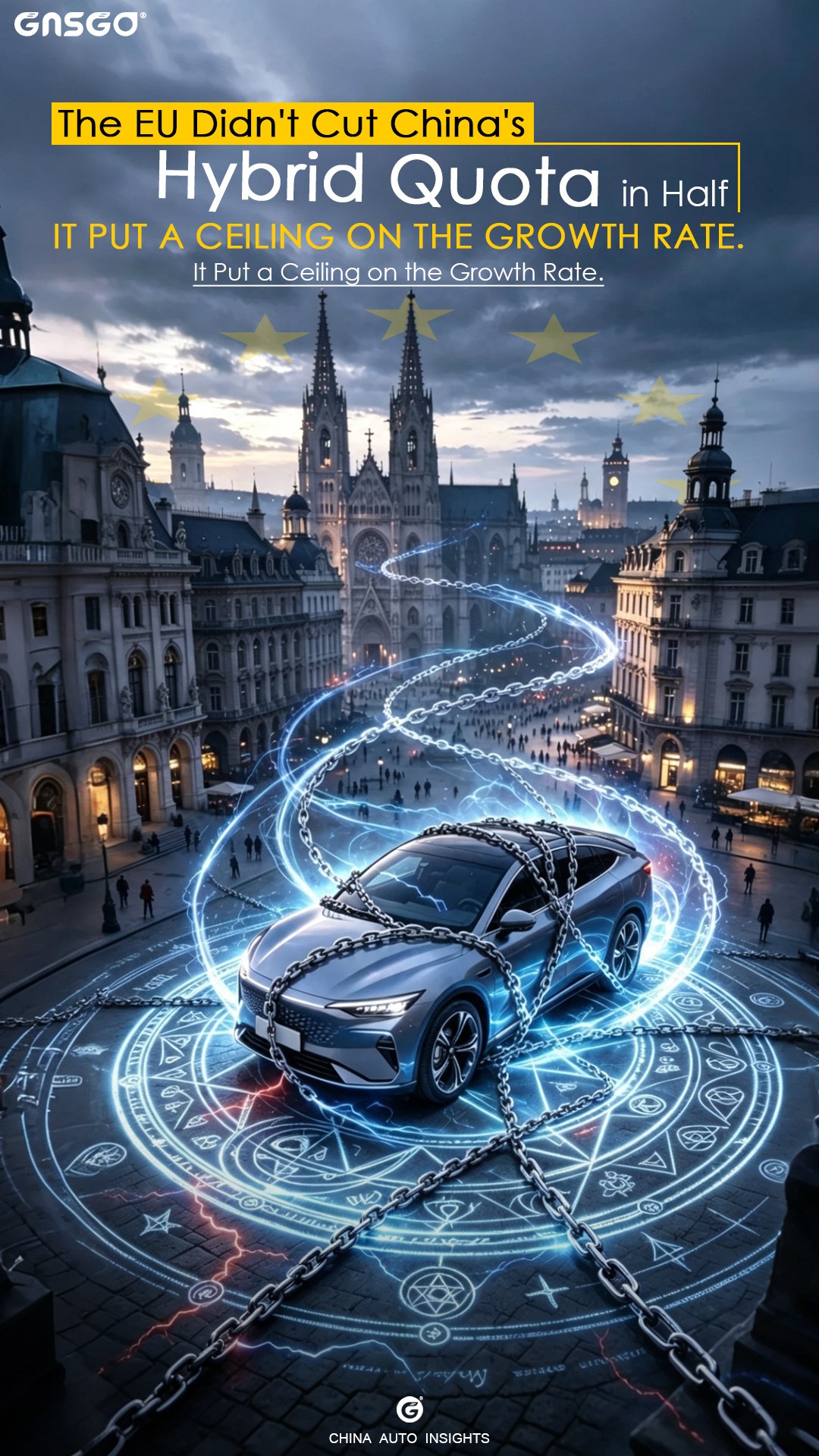
The quota starts at 350,000 units per year and rises 6% annually for four years, based on a 2025 baseline of 302,000 units. The deal doesn’t cap exports. It caps the growth rate. And in doing so, it creates a four-year window for localisation.
The arrangement applies to hybrids (HEV) and plug-in hybrids (PHEV), not battery-electric vehicles. Chinese brands now hold 14% of Europe’s HEV market and 25% of the PHEV market, both up from 2% in 2024.
When a vehicle is exported from China, its parts come from China. When a vehicle is built in Hungary or Spain, its parts should — in principle — localise. Body panels, subframes, battery enclosures, thermal components. The Tier-1 suppliers that feed an Almussafes or Szeged production line are European. The logistics route from factory to warehouse is European.
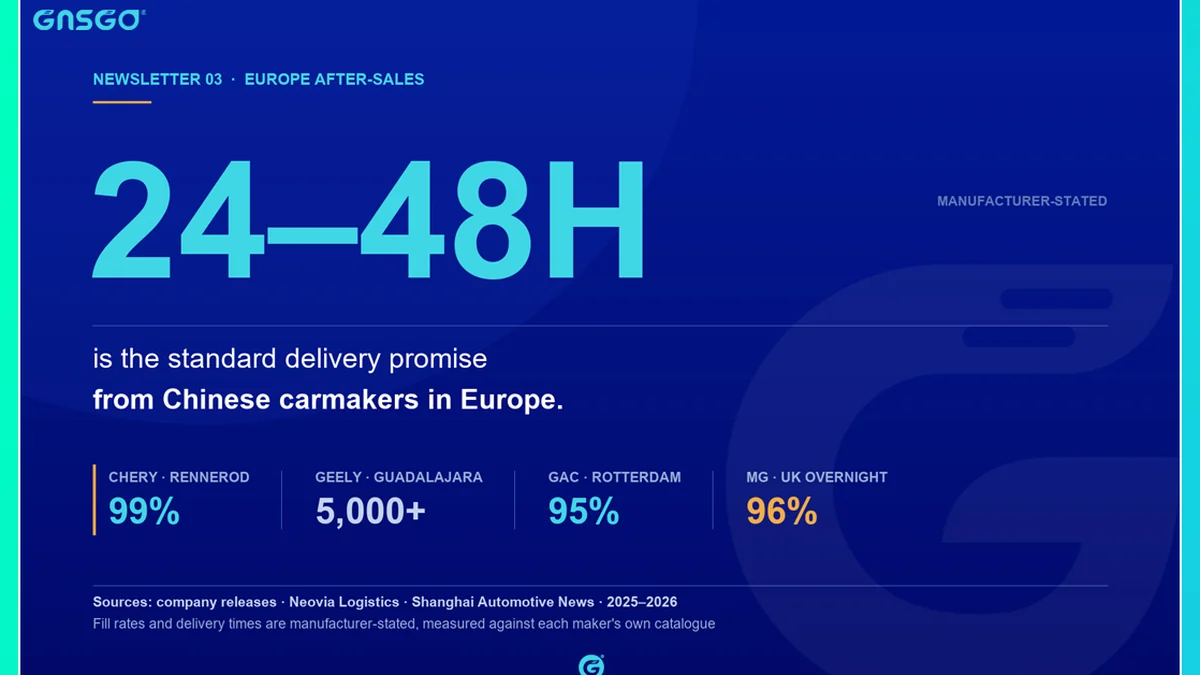
Geely’s Amsterdam spare parts centre already operates on a “European central warehouse plus national satellite warehouses” model covering five countries. Changan’s European parts network reports a 97% fill rate. BYD runs parts warehouses in the Netherlands, Sweden, the UK, and Poland.
The four-year quota window creates a localisation deadline for manufacturing. It does not create a deadline for opening the parts channel to independent distributors and multi-brand workshops.
The localisation race is underway. BYD, Chery, Geely, Leapmotor, and SAIC are all building or planning European production. The quota accelerates that. Each plant that opens shifts a portion of the parts supply chain onto European soil.
The quota answers the “how many” question for vehicle imports. The “who gets the parts” question is still open.
Related: MG compatible parts · China-made parts index
Sources: company statements and trade press as cited in the text.
Originally published on LinkedIn — read the post and the discussion →