Chinese Parts Exports to Europe and the Three Filters
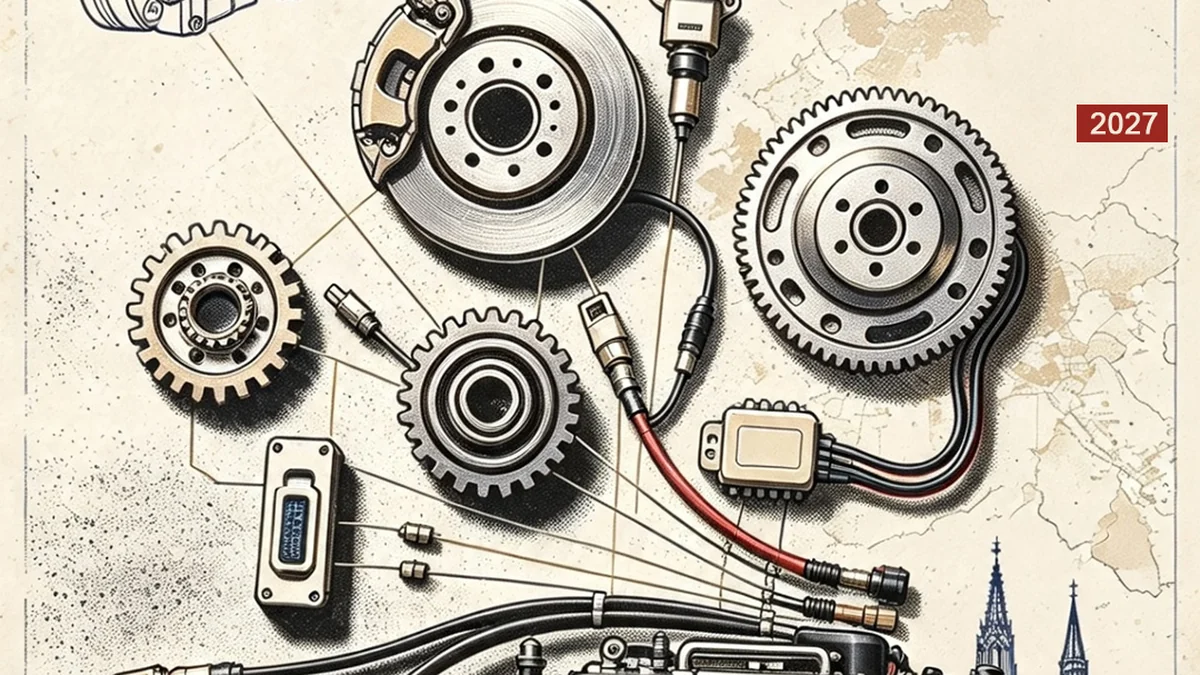
Chinese auto parts imports into the EU nearly doubled between 2019 and 2025. Their share of total European parts imports rose from 4% to 7%. €22 Billion In. €16 Billion Out. The Trade Reversed. The Rules Are Doing the Rest.
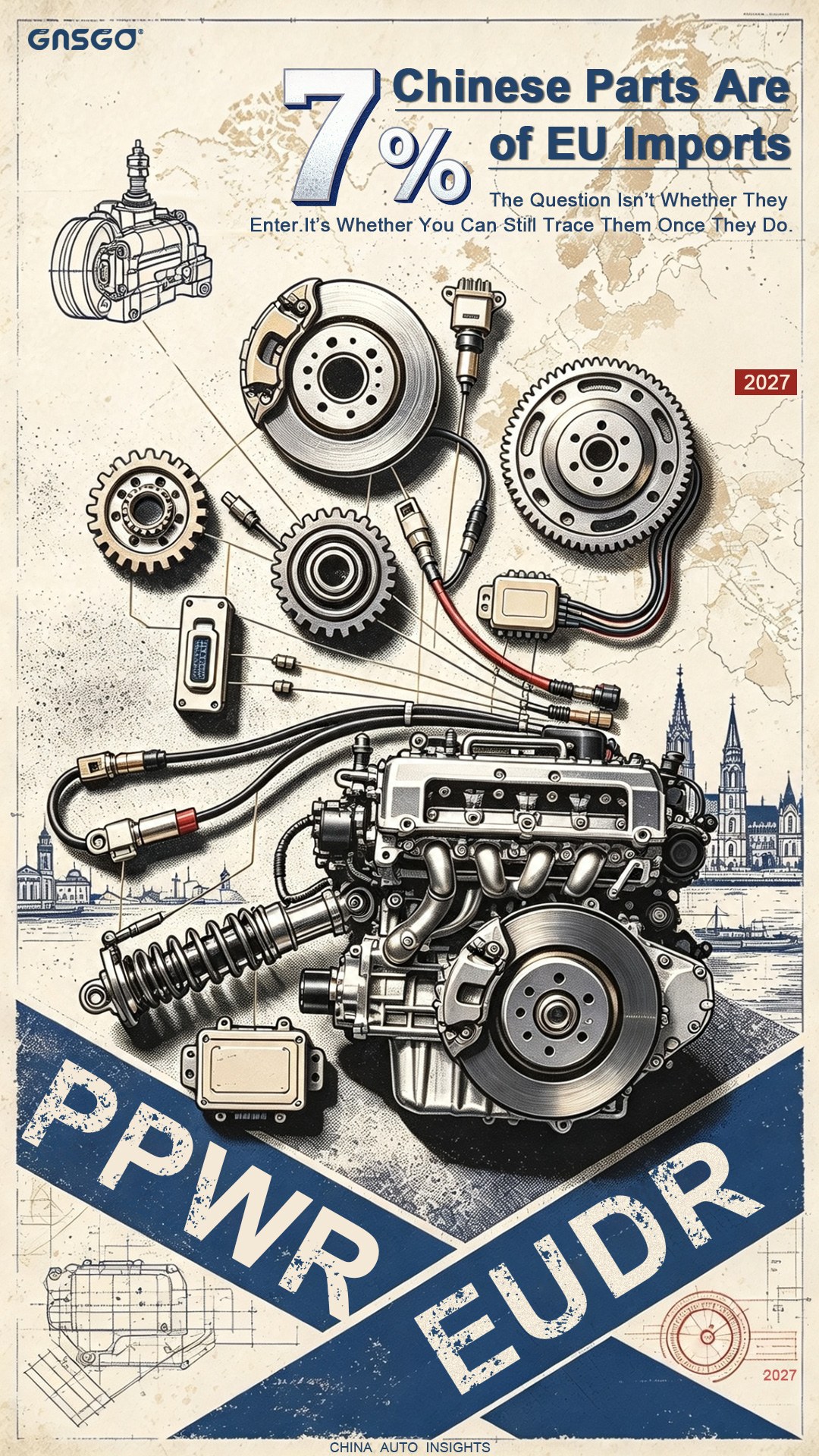
The underlying logic of China-EU auto parts trade is shifting from “trade flow” to “institutional screening.” Three layers of filters are landing at the same time: local content, green compliance, and the re-writing of corporate identity through M&A.
Three filters, arriving at once
Filter one: Local content. The 70% rule turns a tariff question into a qualification question. The component isn’t the problem. The vehicle it goes into is. A Chinese OEM building in Europe must bring its supply chain with it.
Filter two: Green compliance. PPWR applies fully from August 12, 2026. Vehicles are out of scope, but the packaging chain is not. Dust covers, stretch film, wooden pallets, spare parts cartons, heavy-duty battery packaging — all covered. E-commerce parts face a hard limit: void space must not exceed 50%.
Filter three: Identity re-writing. This is the layer most people miss. Chinese parts companies are entering Europe through factories and acquisitions. Zhongding is producing in Slovakia. Shuanghuan in Hungary. Huashuo in Hungary. On the M&A side, Chinese companies have acquired or invested in more than 130 European auto parts businesses since the mid-2000s. In 2025, deal volume rose from 4 to 9, and total value from $393 million to $777 million.
EUDR does not require every downstream operator to submit a due diligence statement. The European Commission’s amendment proposal makes that explicit: downstream operators and traders commercialising EUDR products already placed on the EU market are no longer obliged to file their own DDS.
PPWR follows the same pattern. The regulation requires traceability between the product, the packaging configuration, the physical packaging components, the suppliers behind those components, and the final declaration of conformity. For the aftermarket, that traceability is complicated by repacking.
The independent aftermarket’s problem is not market access. It is identity continuity.
A Chinese-origin part that enters through a distributor, gets repacked, and reaches a workshop carries three identities: the origin identity (EUDR rubber, wood, or paper), the packaging identity (PPWR compliance), and the repair identity (FIGIEFA and the ongoing fight for technical information access). Each identity has a different evidence trail. None of them are automatically linked.
Related: China-made parts index
Sources: ACEA; company statements and trade press as cited.
Originally published on LinkedIn — read the post and the discussion →