Chery Opens a Parts Warehouse in Germany Before Selling a Single Car

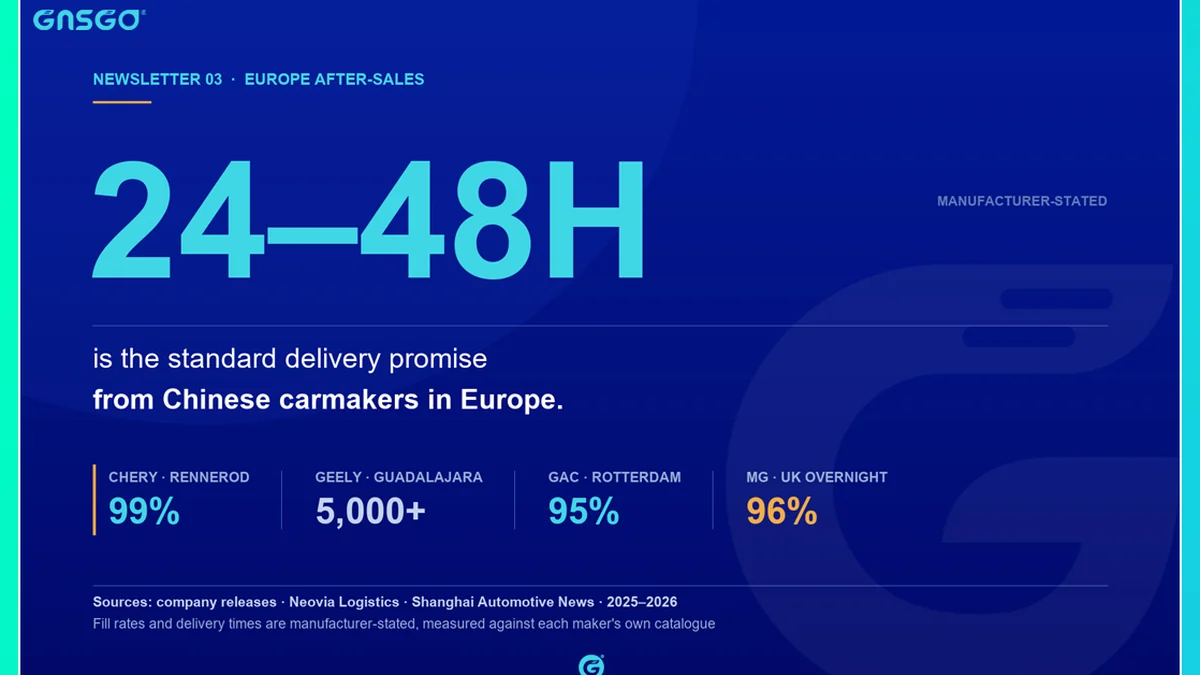
In December 2025 — more than a year before its first vehicle goes on sale in Germany — Omoda & Jaecoo opened a central spare parts warehouse in Rennerod, Rhineland-Palatinate, in partnership with Kühne+Nagel. The warehouse stocks parts before the dealer network is fully built. The commitment: 99% parts availability within 24 hours.
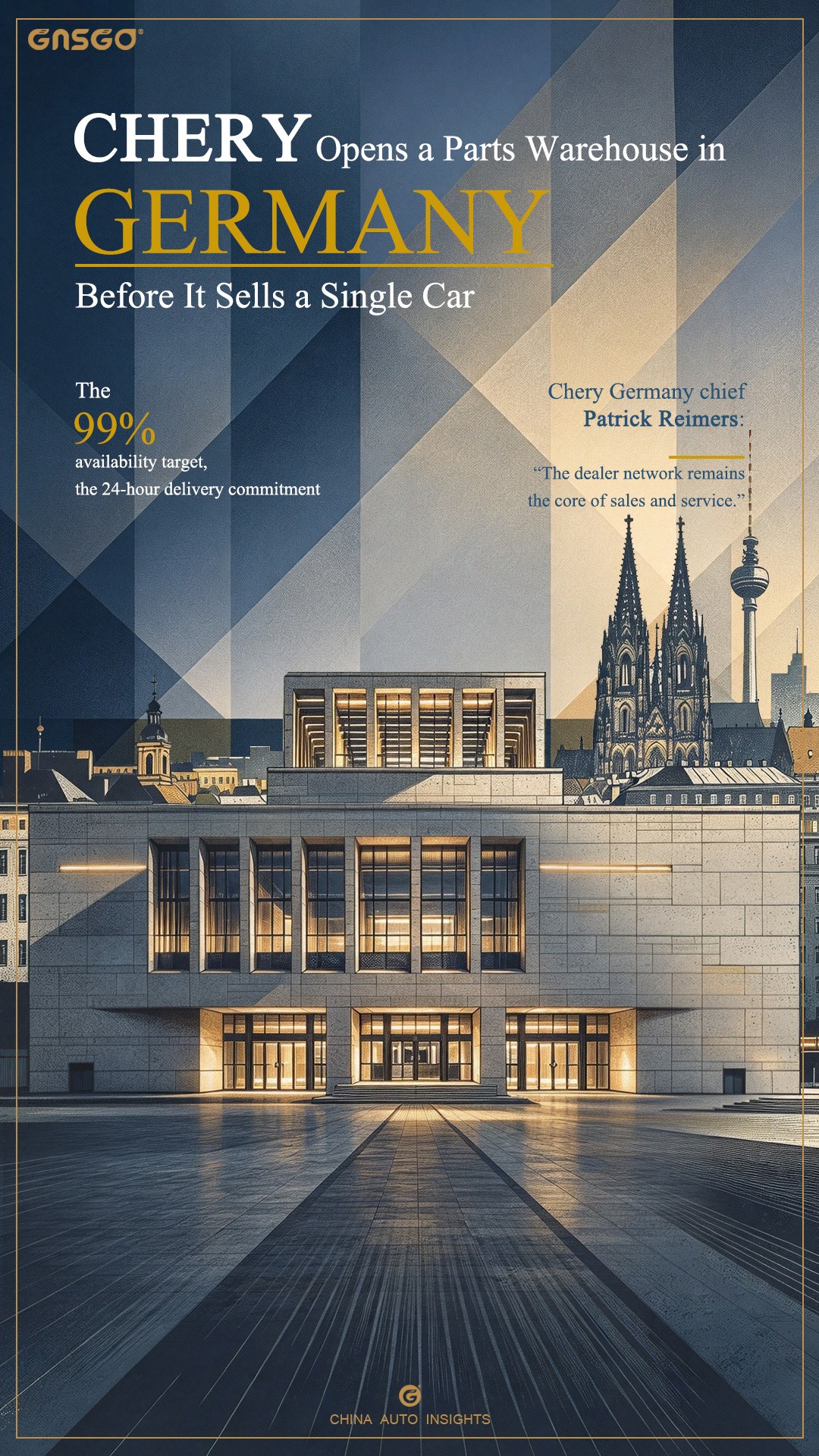
A spare parts warehouse that opens before the first car is sold is not a support function. It’s the market entry strategy.
Chery’s main brand enters Germany in H1 2027 with four hybrid SUVs: Tiggo 4, Tiggo 7, Tiggo 8, and Tiggo 9. The first battery-electric model, the Chery Q, follows at the end of 2027. The Frankfurt headquarters will house showrooms for Chery, Omoda, and Jaecoo.
Chery Germany chief Patrick Reimers has been explicit: the dealer network is the core of sales and service. “A car can be sold quickly on price. Building long-term customer satisfaction and loyalty is harder. For a new brand, you need local contacts and a functioning service network.”
At least 30 active dealers in Q1 2027. At least 100 sales and service partners by the end of 2027. Jens Weichert, hired as Head of Sales in September 2026, previously worked on BYD’s German market entry and held sales roles at Stellantis and Hedin Mobility. He’s responsible for building the network.
In France, Chery signed a three-year partnership with DHL Supply Chain in April 2026. Spare parts are managed from a multi-client site in Meung-sur-Loire near Orl?ans — thousands of references, from small components to body panels, batteries, and hazardous goods. The commitment is delivery anywhere in France within 24 hours. The operation covers authorised dealers and approved repairers.
In Spain, Omoda and Jaecoo opened a distribution centre near Madrid. In Germany, the Rennerod warehouse preceded the sales launch. The pattern is consistent: parts logistics is treated as a precondition for market entry, not a consequence of volume.
For European parts distributors and multi-brand workshops, the question is structural. Chery is investing in the right infrastructure — local warehousing, logistics partners, battery handling capability. That infrastructure could, in principle, support independent aftermarket access.
Chery has done what few Chinese brands have done: built the spare parts warehouse before the sales network. The 99% availability commitment is real. The 24-hour delivery promise is real. The battery logistics capability is real.
Related: China-made parts index
Sources: company statements and trade press as cited in the text.
Originally published on LinkedIn — read the post and the discussion →