Audi and Huawei: Who Defines the Flagship
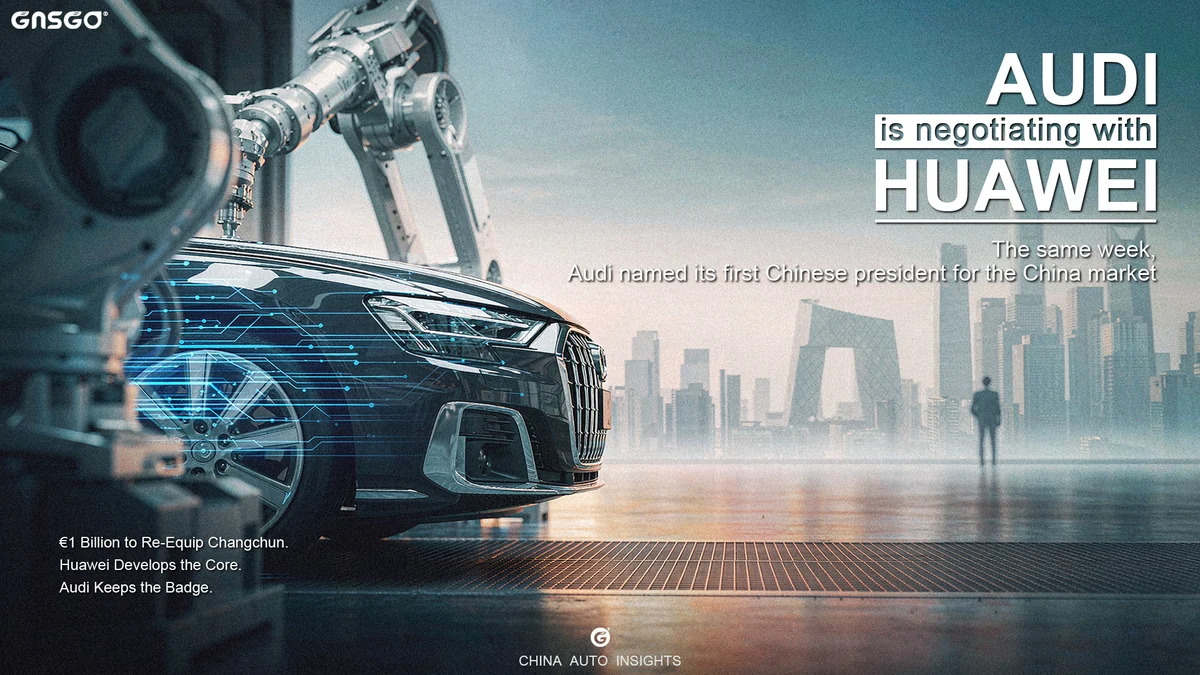
The German business magazine Manager Magazin reported on October 20 that Audi is negotiating with Huawei to develop a China-only version of the next-generation A8. The car would be built in Changchun, not imported from Germany. Huawei would supply core development — the German word used was Kern entwickelt, core engineering, which in context points to the intelligent cockpit and driver-assistance stack, not the full vehicle platform.
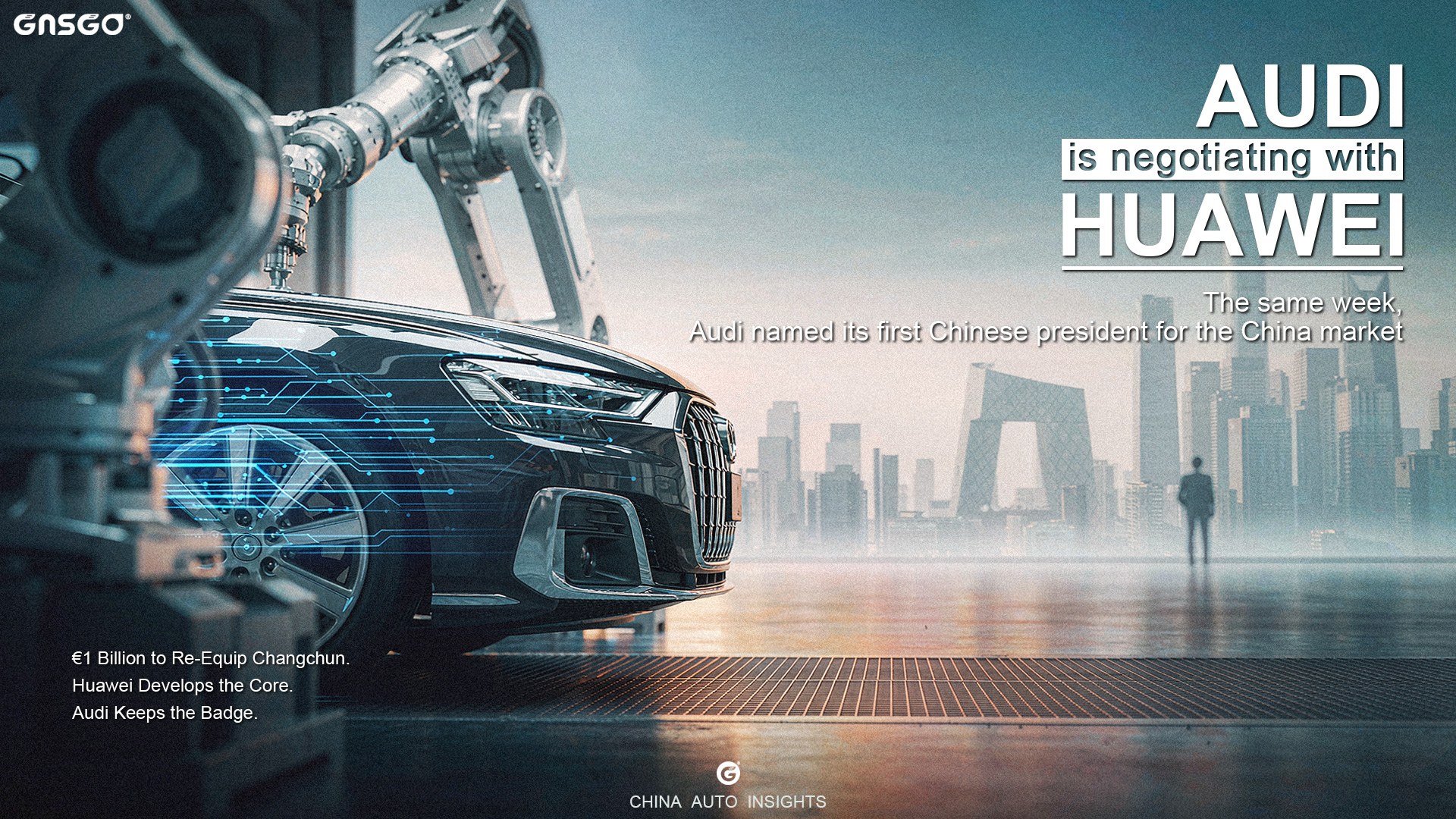
The same week, Audi named its first Chinese president for the China market.
Audi Is Not Buying Huawei Technology. It Is Outsourcing the Definition of Its Flagship.
The new A8 plan is an attempt to close that gap by moving the decision layer closer to the market. The question is whether Audi can do that without giving away the one thing a flagship still needs to own: the definition of what the car is.
The Changchun plant is a majority-Audi joint venture — 55% Audi, 40% FAW, 5% Volkswagen China — the first Audi-controlled JV in China.
When a flagship is developed around a partner’s architecture, the diagnostic protocol, the software update path, and the calibration data increasingly belong to that partner’s ecosystem. The parts catalogue may still carry an Audi part number. The service routine may still run through an Audi dealer tool. But the intelligence layer — the part that decides whether a workshop can complete a repair or has to send the car back to the OEM — sits with the technology supplier.
The Question for European Parts Distributors and Workshop Networks.
The dealer network will get the diagnostic access first.
Will the independent aftermarket in Europe have the diagnostic access and parts data it needs to service a car whose intelligence layer was defined outside the OEM’s traditional engineering chain”
Related: China-made parts index
Sources: Manager Magazin; company statements and trade press as cited.
Originally published on LinkedIn — read the post and the discussion →